
What a coach should know about a young athlete’s sleep, recovery and load

A demanding session is on the plan. The athlete arrives on time, gets changed and joins the warm-up. Everything looks ordinary. It takes the first difficult task to reveal that something is different today.
The coach knows the programme, but may know little about the athlete’s night. Late homework, extra activities and an unexpectedly exhausting session can all remain out of sight. At 13–16, sport takes up a large part of life, but it is only part of the story.
Preparing for training therefore starts before the warm-up: with understanding what the young person brings to the session.
The same session can feel very different
Two athletes can complete identical work and finish in very different states. One finds it manageable; the other calls it the hardest session of the week. Duration, distance and repetitions alone cannot explain the difference.
RPE, a rating of perceived exertion after training, adds the athlete’s experience. It is not a mark for character or commitment. If an athlete usually rates similar work as 4, then starts reporting 7 on the same scale, that deserves a conversation. It does not automatically call for a change to the plan.
An early-morning “I feel fine” also needs context: recent sessions, sleep and how the athlete felt at the end of previous days.
Where Polar Loop and WHOOP fit
Wearables offer a view of hours the coach cannot observe. Polar Loop tracks sleep, heart rate and activity; WHOOP presents Sleep, Recovery and Strain. Regular use and current data can make them useful additions to a coach’s observations. Polar Loop, WHOOP.
Each system has its own definitions. Polar calculates cardiovascular load using heart rate and exercise duration, with Strain covering seven days and Tolerance twenty-eight. These values are not interchangeable with WHOOP Strain or RPE. Polar Training Load Pro documentation.
The useful question is whether something has changed for this athlete. Resting heart rate and heart rate variability, or HRV, should be considered against personal history, alongside sleep and how the athlete feels. One reading cannot explain a change or decide whether someone is ready to train.
A band can estimate the course of a night. It cannot explain why a teenager stayed up late, or why they hesitate to mention pain. That still needs a conversation.
Choosing a device for a minor also means considering age, comfort, the sport and account conditions, including parental consent where required. Buying equipment is not a prerequisite for useful monitoring.
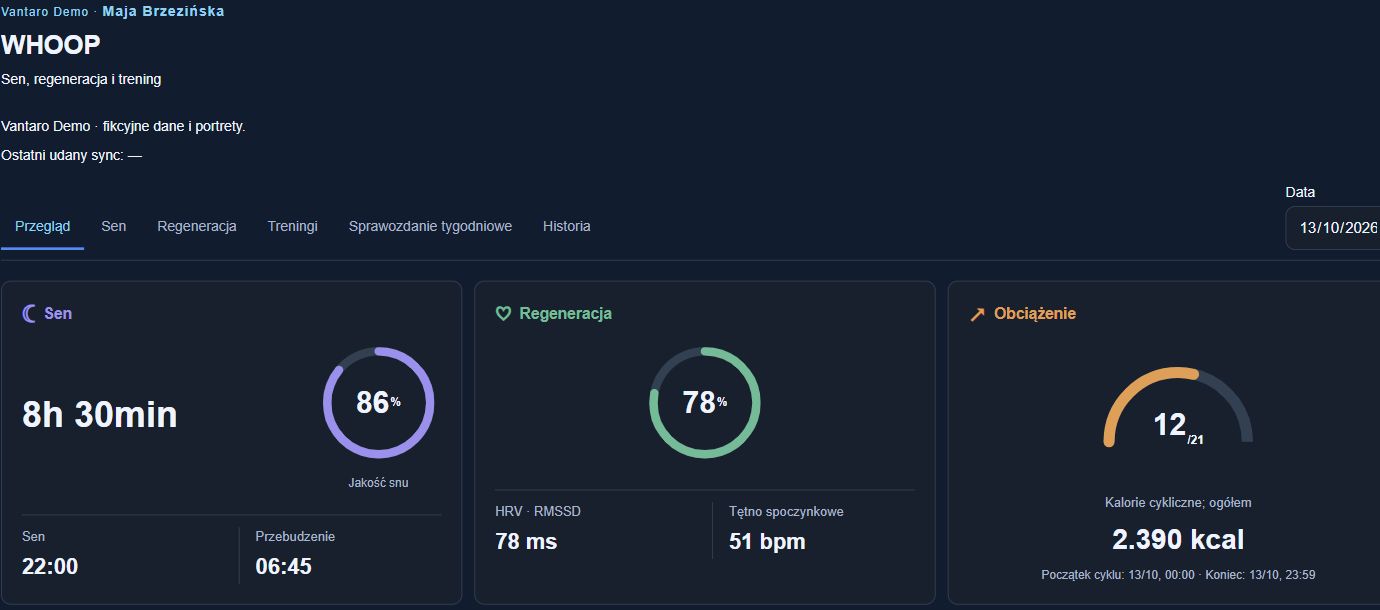
Sleep, recovery and strain appear side by side. This Polish demo screenshot uses sample data, with no connected device account.
What should be visible before a session
A coach needs a clear picture of the preceding days: what the athlete actually did and how demanding it felt. Extra club training, a school competition or other activity may have changed the week considerably.
Sleep comes next. “Good” or “poor” tells little without the length of the night, bedtime and recurring changes. One short night and several short nights in succession tell different stories.
Recovery data add another piece. Where available, they should show change against individual history and the measurement date. Yesterday’s result does not become today’s simply because it remains on screen. Missing data mean neither zero load nor good recovery.
Then comes the check-in: well-being, fatigue, stress, readiness and any soreness or pain. A brief answer can reveal something absent from the measurements, particularly when it differs from the athlete’s usual responses.
Putting these details together helps a coach decide who needs a conversation before work begins. Understanding the situation comes before deciding whether to change the session.
An ordinary Thursday
Imagine a fifteen-year-old athlete with a demanding Thursday session ahead. She completed Tuesday and Wednesday’s work, but rated both sessions harder than usual. She reported substantial fatigue in the evening. Her last two nights were shorter, and this morning she mentioned heavy legs.
Each detail could be overlooked on its own. Together, they warrant a pause before the next load.
“The last two days seem to have taken a lot out of you. How do you feel today?” Her response and the warm-up help guide the session. A different task or intensity may be appropriate; a conversation with a parent about the week may also help. Pain or persistent concerning symptoms require suitable professional assessment. An app or wearable cannot provide that assessment. American Academy of Pediatrics report.
This is an illustrative situation, not a rule that two poorer readings always require an easier session.
How VANTARO helps
VANTARO brings information about the same athlete into view. In the Polish demo checked for this article, the athlete view presents sleep, recovery and load, while the Check-in tab places current responses alongside previous ratings. This helps a coach notice a change that might be easy to miss in today’s answer alone.
The check-in opens the day. RPE describes the effort of a particular session. The end-of-day fatigue rating records how the athlete feels after the rest of the day’s responsibilities. These are three distinct moments. Together, they help explain what happened between the plan and tomorrow morning’s response.
The demo also includes Polar and WHOOP data views. They illustrate presentation using sample data; actual measurements depend on an active integration and the information available. It should not be assumed that every band automatically supplies every parameter.
Screenshots show the Polish demo interface. Select an image to open it at full size.
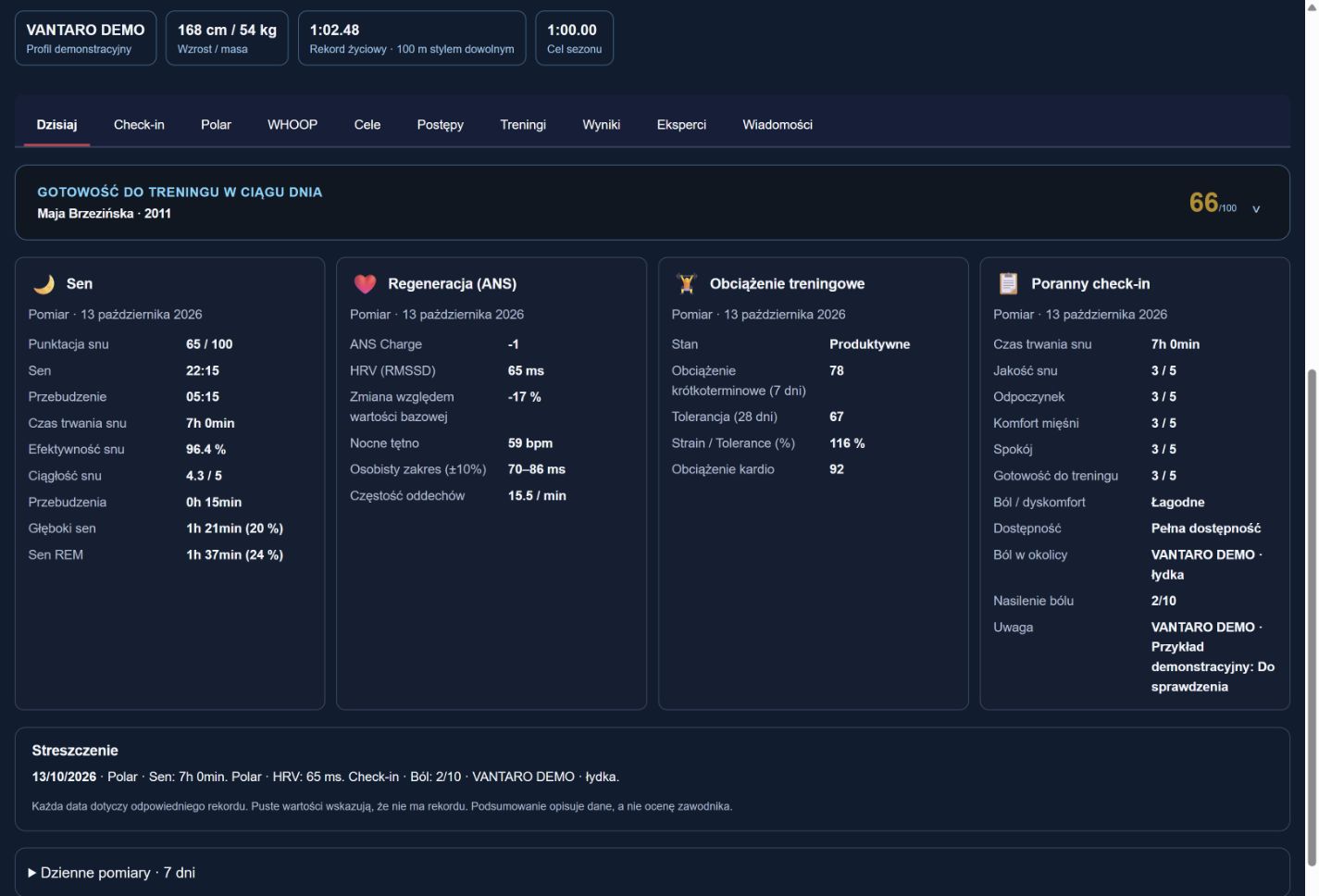
The coach’s view before training. The Today tab presents sleep duration, HRV against a personal baseline, 7-day and 28-day load, and the morning check-in. Each area includes its measurement date. These are demo data.
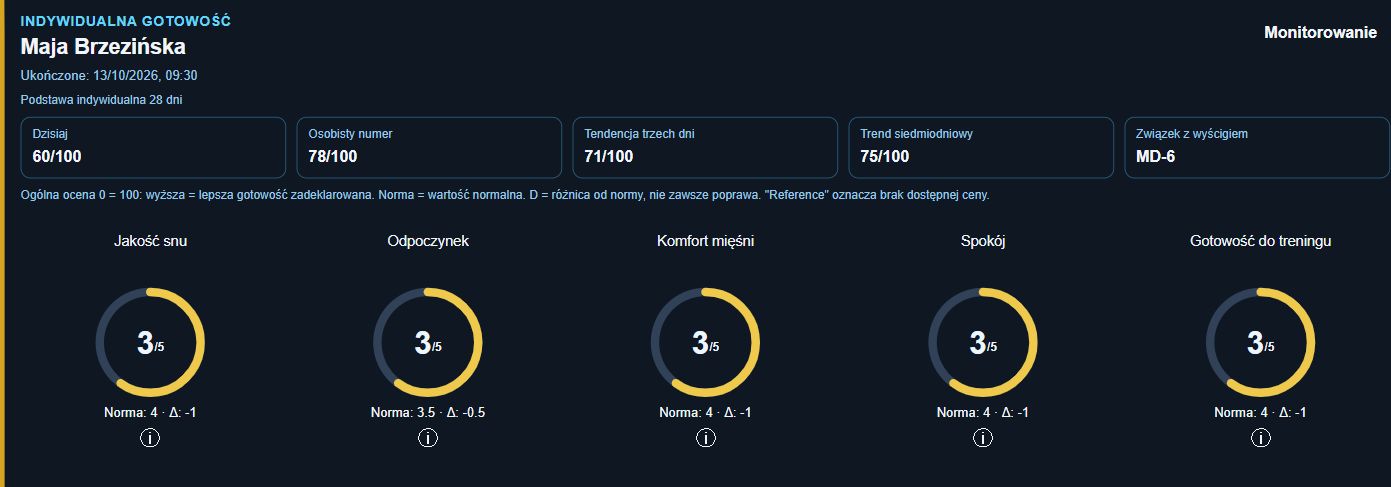
What has changed for this athlete? The Check-in tab places today’s responses alongside an individual baseline and trends. This example shows 60/100 against a personal reference of 78/100. It starts a conversation; it does not decide the training load.

How hard did training feel? RPE adds the athlete’s experience to the completed session.
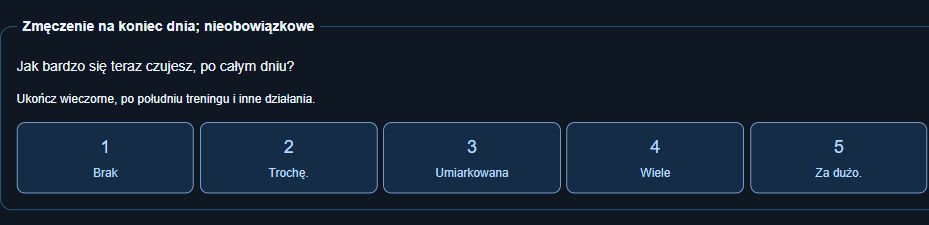
How tired does the athlete feel at the end of the day? The evening rating adds a perspective after all daily responsibilities.
For a parent, this shared picture can support a conversation about rest, travel and late evenings. The coach understands the training, the parent knows home life and the athlete describes their own experience. Everyone does not need to interpret every metric. What matters is that a meaningful change does not disappear between their observations.
Useful monitoring leads to action: a conversation, a considered decision to retain the plan, or a justified adjustment. Numbers earn their place when they help us understand the person about to begin training.