
The club coach sees the scheduled sessions. A parent knows the travel arrangements and how long homework takes. A teacher runs PE, while a private coach works on technique. Each person is responsible for one part. But who checks how those parts fit into the life of a 13-, 14- or 16-year-old?
Before adding another session, it is worth asking that question. Even well-planned training needs room for recovery, school, meals and ordinary teenage life.
Additional sessions need a clear purpose
The question of whether a young swimmer needs more training and private lessons also appears in a public article prompted by a parent’s question. It illustrates a dilemma: how do we distinguish useful support from simply adding commitments? Before deciding, identify what the session is for and where it fits into the week.
A 2024 American Academy of Pediatrics report recommends at least 1–2 days off each week from competition and sport-specific training, and at least 2–3 months away from each specific sport during the year. Annual breaks can be spread out and do not mean avoiding all physical activity. These are general recommendations to inform planning, rather than an individual prescription. AAP report.
When everyone sees only one part
Imagine a 14-year-old athlete with club sessions, two additional training sessions, school PE and a weekend competition. The number of sessions alone does not explain her day. Travel, studying, meals and sleep also need to be included. This is a fictional example, but the same review can be used in different sports.
The private coach may not know about the demanding session the day before. The parent may not know the purpose of the next workout. The club coach may not know that the athlete arrived home late and studied for a test. A shared view of the week brings those details together.
The AAP report notes that sporting stress can combine with academic, social and family difficulties, while insufficient sleep undermines recovery. AAP report. This does not require recording private details. Identify the additional demands that matter for planning.
Record both the plan and what actually happened
Review seven consecutive days together. For each day, record the activities and their purpose, training duration, travel, important commitments and space for recovery. After training, add a brief note about how the athlete experienced the effort. This helps identify a crowded schedule and decisions that need coordination.
There is no need to turn every activity into a numerical score. Record unknowns too. Missing information about a private session is a reason to ask about it, rather than leave it out.
Keep the plan separate from what happened. Sessions can run longer, journeys can be delayed and additional training can appear at the last minute. Ask how the athlete experienced the effort, instead of assessing it solely through session duration.
Look for clashes in the schedule
Use five questions to review the week:
- Have demanding sessions been scheduled close together without coordination between coaches?
- Does each additional session have a clear purpose?
- Do travel and schoolwork leave enough time for the intended sleep schedule?
- Is planned recovery still free from additional sporting commitments?
- What does the athlete say about the week?
The American Academy of Sleep Medicine recommends that teenagers aged 13–18 regularly sleep 8–10 hours per 24 hours. AASM consensus. If the schedule consistently allows much less, review the day’s organisation. When training ends late, the journey home is long and school starts early, simply saying “sleep more” does not resolve the conflict.
Also check whether a supposedly free day has filled up with extra sporting activities the lead coach does not know about. Additional training may be justified, but the number of hours alone does not measure the quality of development.
Agree on one change and who will act
Start with one specific clash, such as a late extra session before an early departure. The lead coach discusses a change with the other coach, the parent adjusts the arrangements and the athlete understands why the decision was made.
It helps to identify someone at the club to coordinate the plan. Specialists contribute within their own areas without having to reconstruct the timetable from several conversations. At the next review, check whether the change happened and how the athlete experienced it.
Start with one week, one clash and one agreed action. This review supports organisation; it is not a test that establishes an individual’s safe training load. Before adding another session, make sure someone can see the whole plan.
How VANTARO can help show the whole week
In everyday coaching, it is useful to compare planned training with how the athlete actually feels. VANTARO brings in wellbeing information, session RPE ratings and training-load and recovery data. Reviewing them together can help a coach prepare a conversation and help a parent understand recovery arrangements, within the information shared with their role.
A check-in captures the athlete’s perspective
A check-in brings the young athlete’s own experience into the weekly review. The conversation can cover sleep, wellbeing and anything making participation difficult. Changes from the athlete’s usual experience matter, as does the opportunity to explain them in their own words.
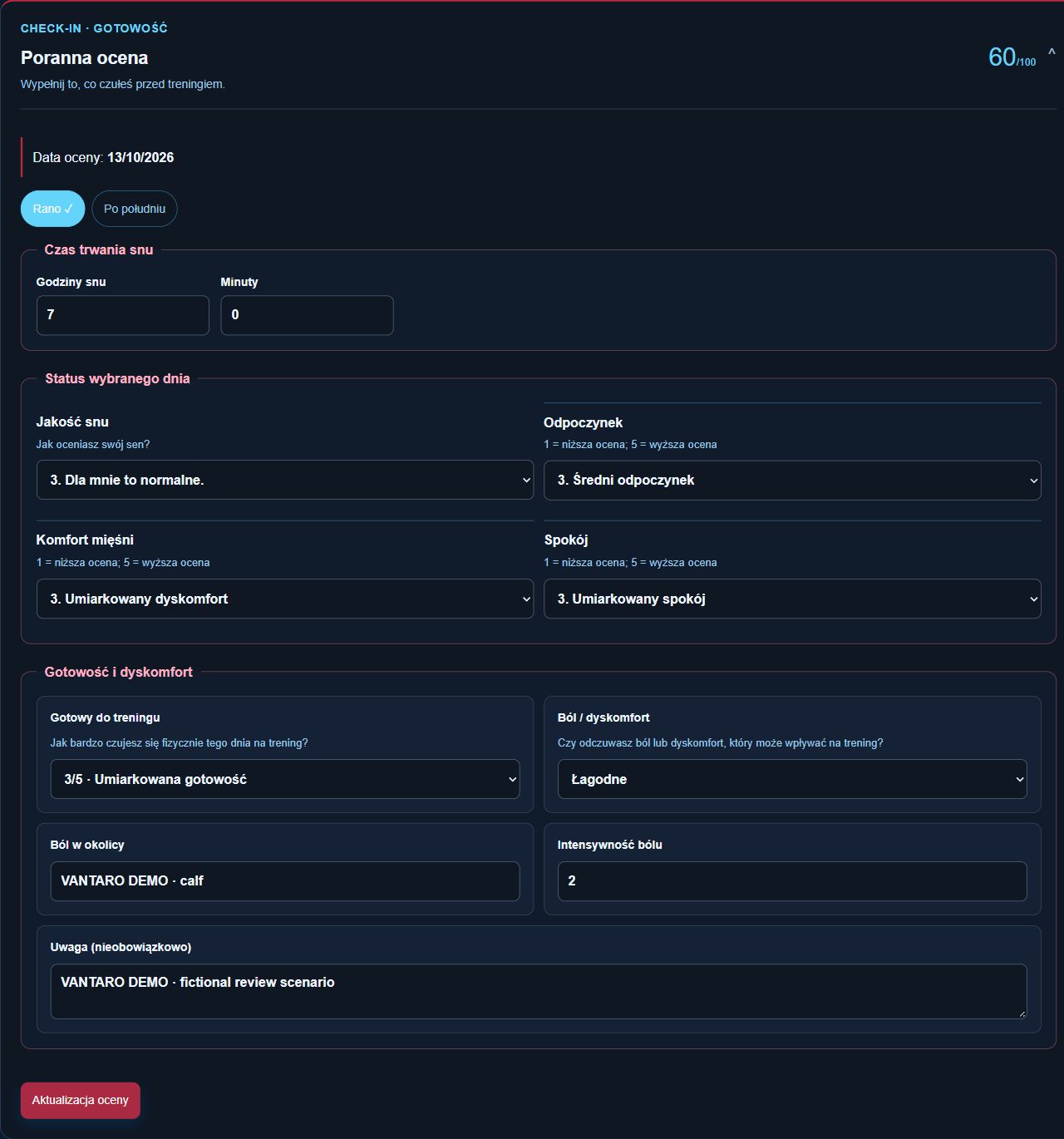
In the demo’s morning check-in, the athlete enters sleep duration and rates sleep quality, rest, muscle comfort, calmness and readiness to train. They can also report pain or discomfort and add a note. The afternoon version includes energy after school. These are self-reported observations.
The check-in from the coach’s perspective
Before training, the coach opens the athlete’s profile and the Check-in tab. It shows today’s score, a personal reference point and three- and seven-day trends. Below are separate ratings for sleep quality, rest, muscle comfort, calmness and readiness to train, each compared with an individual baseline.
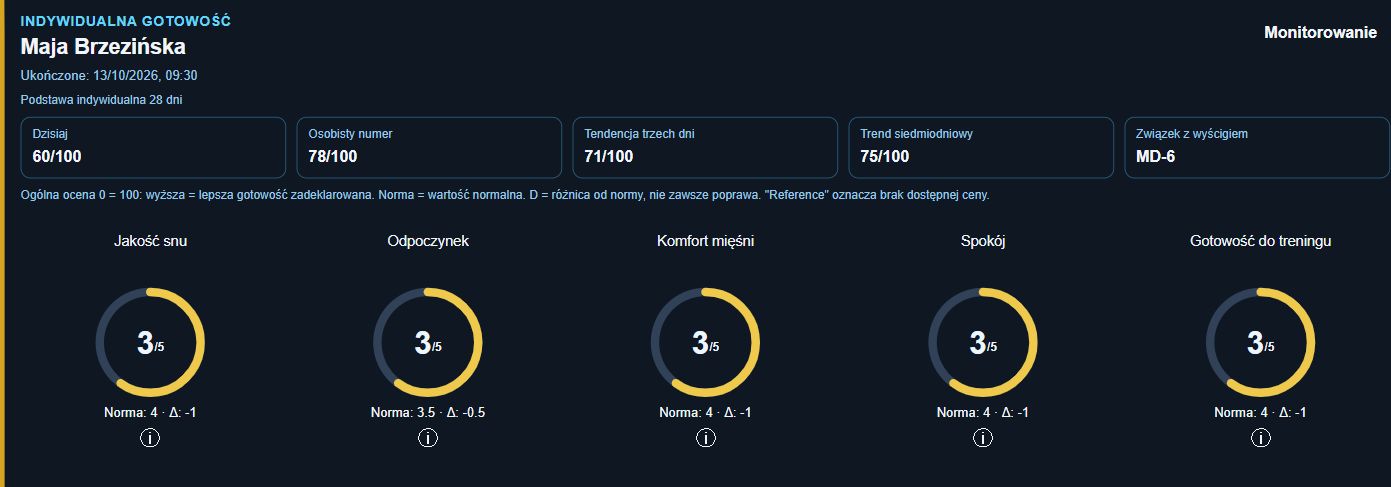
Maja’s example shows how an athlete’s responses appear in the coach’s view. Today’s check-in is 60/100, compared with a personal reference point of 78/100. The three-day indicator is 71/100 and the seven-day indicator is 75/100. All five self-assessment areas are rated 3/5 today. The coach can review both the individual responses and their broader context.
This is a good moment to ask: “What is affecting how you feel most today?” The conversation may cover sleep, school, previous sessions or discomfort. The coach then decides on the next steps and seeks specialist support when needed. A score helps identify a change; the decision requires conversation and assessment. The screens shown use sample demo data.
RPE describes how demanding a session felt
After training, the athlete rates perceived exertion. In the VANTARO form shown here, they select a value from 1 to 10 for the whole session, linked to its date and session period. This adds the athlete’s experience to the record of completed training. It rates effort, not execution quality, character or commitment.

An end-of-day review connects the information
The demo’s afternoon session also provides a separate, optional “End-of-day fatigue” rating on a 1–5 scale. The athlete reports fatigue after the whole day, including training and other activities. This is a self-assessment, not an automated medical summary or a score for how well the day went.
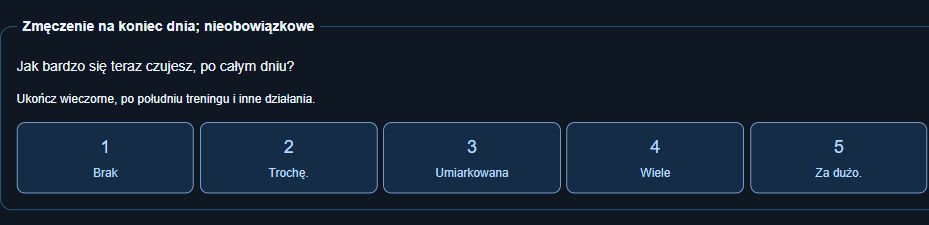
The information can be discussed together. The responses below are fictional examples, separate from the values shown in the screenshots.
| Moment | Example athlete response | What to discuss |
|---|---|---|
| Pre-training check-in | “I slept less than usual and feel tired.” | What were the night and the day before training like? |
| Post-training RPE | “8/10; the final part was very demanding.” | What felt difficult, and how did similar sessions feel previously? |
| End-of-day review | “I still feel tired after school and training.” | Does tomorrow’s plan need reviewing, and who will do it? |
A single rating does not explain the cause of fatigue. Several entries over successive days provide more context for a conversation and a plan review.
The coach can revisit days when demanding sessions coincided with poorer wellbeing. The parent can help check travel arrangements, sleep opportunities and additional commitments. Together, they can agree on a specific next step. The value of monitoring lies in using information for conversation and action, while respecting the young athlete’s privacy and growing independence.